

When you think of push-ups, you likely associate them with strengthening your arms and chest. However, what if I told you that push-ups also work out your abs in surprising ways?
You may be surprised to learn that these seemingly simple exercises engage your core muscles, improve stability and balance, activate deep abdominal muscles, and even promote better posture. But that’s just the beginning.
There are a total of nine unexpected ways that push-ups can benefit your abs, and you won’t want to miss out on these lesser-known advantages.
Table of Contents
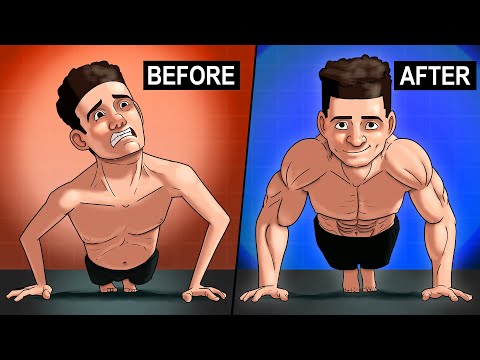
Related Video: "10 Tips to Increase Your Pushups FAST" by Gravity Transformation - Fat Loss Experts
Main Points
– Push-ups are an effective exercise for strengthening the core and engaging multiple muscle groups simultaneously.
– Incorporating push-ups into your workout routine can improve overall core strength, stability, and balance.
– Push-ups can help improve posture, reduce back pain, and prevent lower back injuries by stabilizing the spine and pelvis.
– Adding variety to your ab workouts with different types of push-ups can enhance metabolic rate, increase calorie burning, and stimulate fat loss.
Engages Core Muscles

Engage your core muscles by maintaining a straight body position throughout the push-up exercise. This means keeping your abs tight and your body in a straight line from your head to your heels. Abdominal engagement is crucial for stability and to prevent your lower back from arching.
As you lower yourself towards the ground, focus on your breathing techniques. Inhale as you lower your body and exhale as you push back up. This controlled breathing not only helps you maintain focus but also ensures that your core muscles are engaged throughout the entire movement.
Core strength and body alignment are essential components of a proper push-up. By actively engaging your core, you not only work your abdominal muscles but also develop overall core strength. As you maintain a straight body position, your core muscles work to stabilize your body, which in turn enhances your body alignment. This not only benefits your abs but also helps to prevent injury and improves your overall posture.
Improves Stability and Balance

When you perform push-ups, you’re not just working your abs – you’re also improving your stability and balance.
By engaging your core muscles and enhancing your coordination, push-ups help you develop the ability to maintain control and stability during movement.
This improved stability and balance can benefit you in various activities and sports, making push-ups a valuable exercise for overall physical performance.
Core Engagement
To effectively work your abs during push-ups, focus on maintaining a strong and stable core throughout the movement. Core activation and breathing techniques are crucial for engaging your abdominal muscles while performing push-ups.
As you lower your body towards the ground, exhale and engage your core to maintain stability. This helps to prevent your lower back from arching and ensures that your abs are actively involved in the exercise.
Additionally, mind-body connection and muscle control play a significant role in maximizing the benefits for your abs. Focus on consciously engaging your core muscles throughout the entire movement, and visualize your abs working to support your body.
Enhances Coordination
As you enhance your coordination during push-ups, your improved stability and balance build upon the strong and stable core engagement needed to effectively work your abs. This enhancement not only targets your abs but also contributes to overall physical coordination.
Improving coordination during push-ups offers a range of benefits that go beyond just building abdominal strength. It improves flexibility, allowing for a greater range of motion and muscle engagement. Additionally, it increases agility, helping you move more efficiently and effectively during physical activities.
These improvements in coordination can have a positive impact on your daily activities, sports performance, and overall physical well-being.
– Enhanced flexibility
– Increased agility
– Greater range of motion
– Improved muscle engagement
– Enhanced overall physical coordination
Activates Deep Abdominal Muscles

Engaging in push-ups not only strengthens your chest and arm muscles but also activates the deep abdominal muscles, providing an effective full-body workout. When you perform a push-up, your deep core muscles, including the transverse abdominis and the internal obliques, engage to stabilize your body throughout the movement. This engagement of the deep abdominal muscles not only helps you maintain proper form during the exercise but also contributes to improved core strength and stability in your daily activities.
The table below highlights the specific deep abdominal muscles that are activated during push-ups:
| Deep Abdominal Muscles | Role in Push-Ups | Benefits |
|---|---|---|
| Transverse Abdominis | Stabilizes the spine and pelvis during the movement | Helps in maintaining proper form and posture, reduces the risk of lower back pain |
| Internal Obliques | Assists in torso rotation and lateral flexion | Enhances overall core stability and functional movement patterns |
Promotes Better Posture

Improved core strength from push-ups results in better posture, enhancing your overall physical appearance and reducing the risk of musculoskeletal issues. When your core is strong, you naturally sit and stand taller, which aligns your spine and reduces strain on your back muscles. Here’s how push-ups contribute to better posture:
– Posture correction: Engaging the core during push-ups helps in aligning the spine, leading to improved posture over time.
– Pilates connection: Push-ups mimic the Pilates concept of engaging the core to support the spine, promoting better posture.
– Core strengthening: As push-ups strengthen the core, they help stabilize the spine and pelvis, leading to improved posture.
– Yoga integration: The engagement of the core during push-ups mirrors the core activation in yoga poses, which supports better posture.
– Reduced back pain: By strengthening the core and promoting better posture, push-ups can alleviate back pain caused by poor alignment.
Incorporating push-ups into your workout routine not only targets your abs but also contributes to improved posture, reducing the risk of postural issues and enhancing your overall physical well-being.
Enhances Overall Abdominal Strength

Strengthening your core through push-ups not only improves your posture but also enhances the overall strength of your abdominal muscles. When you perform push-ups, your abs work hard to stabilize your body, leading to increased core strength and abdominal coordination. This, in turn, contributes to better overall abdominal endurance and core stability.
To illustrate the benefits of push-ups for abdominal strength, consider the following table:
| Benefits of Push-Ups for Abdominal Strength | Description |
| Core Strength | Push-ups engage your entire core, including the rectus abdominis, transverse abdominis, and obliques, leading to improved overall core strength. |
| Abdominal Endurance | By consistently performing push-ups, your abdominal muscles develop greater endurance, allowing you to sustain abdominal contractions for longer periods. |
| Core Stability | Push-ups help enhance the stability of your core muscles, leading to better balance and posture during various physical activities. |
Incorporating push-ups into your workout routine can significantly enhance the overall strength of your abdominal muscles, promoting better core stability and endurance.

Related Video 2: "What Happens To Your Body After 100 Push-Ups a Day For 30 Days" by Jeremy Ethier
Increases Muscle Endurance

To enhance your muscle endurance, incorporating push-ups into your workout routine is an effective strategy. Push-ups offer numerous endurance benefits by engaging multiple muscle groups and promoting muscle activation throughout your upper body and core.
Here’s why push-ups are a great choice for increasing muscle endurance:
– Full-body workout: Push-ups engage various muscle groups simultaneously, including the chest, shoulders, triceps, and abdominal muscles, leading to enhanced overall muscle endurance.
– Progressive challenge: As you get stronger, you can modify your push-up variations to continually challenge and improve your muscle endurance.
– Improved stamina: Regularly performing push-ups can help increase your stamina and endurance during other physical activities or workouts.
– Core engagement: Push-ups require constant stabilization from your core muscles, leading to improved endurance and stability in the abdominal region.
– Functional strength: The muscle activation and endurance gained from push-ups translate to better functional strength for everyday activities and sports.
Incorporating push-ups into your exercise routine can lead to noticeable improvements in muscle endurance, making it a valuable addition to your fitness regimen.
Boosts Metabolic Rate

By incorporating push-ups into your fitness routine, you can effectively boost your metabolic rate and enhance calorie burning throughout the day. Push-ups engage multiple muscle groups simultaneously, leading to increased workout intensity and improved fitness efficiency. This heightened workout intensity not only strengthens your muscles but also stimulates your metabolism, contributing to enhanced calorie burning and fat loss.
When you perform push-ups, your body must support its weight, engaging various muscle groups such as the chest, shoulders, triceps, and core. This full-body activation elevates your heart rate, leading to an increased metabolic rate during and after the exercise. As a result, your body continues to burn calories even after you’ve completed your workout, contributing to greater overall fat loss.
Incorporating push-ups into your routine not only strengthens and tones your muscles but also provides a significant metabolic boost. This makes push-ups an efficient and effective exercise for enhancing your body’s calorie-burning capabilities, helping you achieve your fitness and weight loss goals.
Aids in Preventing Lower Back Pain

Engaging in regular push-up exercises can also contribute to preventing lower back pain by strengthening your core muscles, which play a crucial role in supporting and stabilizing your spine. A strong core provides the necessary support to maintain proper posture and alignment, reducing the strain on your lower back. Here’s how push-ups aid in preventing lower back pain:
– Core Stability: Push-ups engage the entire core, including the deep-lying muscles that support the spine, promoting better overall core stability.
– Improved Posture: Strong core muscles help you maintain good posture, reducing the risk of developing lower back pain due to poor alignment.
– Spinal Support: The strengthened core muscles provide better support to the spine, reducing the likelihood of lower back injuries.
– Balanced Muscle Development: Push-ups promote balanced muscle development, preventing muscular imbalances that can lead to lower back pain.
– Enhanced Flexibility: As push-ups engage multiple muscle groups, they also contribute to overall flexibility, which can alleviate tension in the lower back.
Offers Variety in Ab Workouts

Looking to add some variety to your ab workouts? Incorporating push-up variations into your routine can provide excellent abdominal engagement and core activation. Here are three push-up variations that offer unique benefits for your abs:
| Push-Up Variation | Abdominal Engagement |
| Decline Push-Ups | Targets lower abs as you elevate your feet, increasing the challenge for your core. |
| Spiderman Push-Ups | Engages obliques as you bring your knee towards your elbow during each rep, emphasizing side-to-side movement. |
| Side Plank Push-Ups | Works the entire core, including obliques, as you transition between a side plank and a push-up position. |
Incorporating these push-up variations into your ab workouts not only adds variety but also ensures comprehensive core activation. By engaging different muscle groups within the core, these variations offer a well-rounded approach to strengthening and toning your abs. Whether you’re aiming to increase difficulty or target specific areas of the core, these push-up variations provide a dynamic and effective way to work your abs.
Frequently Asked Questions
Can Push-Ups Replace Traditional Ab Exercises Like Crunches and Planks?
You may wonder if push-ups can replace traditional ab exercises like crunches and planks.Push-ups offer multiple benefits for your abs, helping to strengthen and tone them. They engage your core muscles, providing a challenging workout for your abs.While push-ups alone may not fully replace traditional ab exercises, they can certainly be a valuable addition to your routine for a well-rounded abdominal workout.
How Do Push-Ups Specifically Target the Deep Abdominal Muscles?
To engage your core during push-ups, focus on maintaining a straight body line. This stabilizes muscles and activates deep abdominal engagement, particularly targeting the transverse abdominis.As you lower and push back up, your obliques work to stabilize your body, strengthening them as well.


