

You know how a well-tended garden yields the most vibrant blooms? Your arm muscles are no different. Just like a gardener carefully tends to each plant, you need to carefully consider how often you work out your arms to see optimal growth.
But how often is too often, or not often enough? It’s a delicate balance, and in this discussion, I’ll guide you through six effective ways to determine the frequency that will best support your arm muscle growth.
Table of Contents
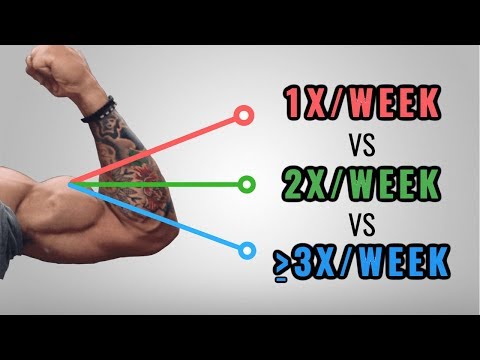
Related Video: "How Often Should You Train Each Muscle To Maximize Growth?" by Jeremy Ethier
Main Points
– Train arms 2-3 times per week with at least 48 hours of rest in between workouts
– Incorporate exercises that isolate and engage biceps, triceps, and forearms
– Vary repetitions to challenge different muscle fibers and promote overall strength and development
– Adjust frequency based on goals, recovery capacity, and body’s response to avoid overtraining and promote muscle growth
Target Specific Arm Muscles

To effectively target specific arm muscles, focus on exercises that isolate and engage the desired muscle groups. When considering how often to workout your arms, it’s essential to allow for proper rest and recovery between sessions. Aim to train your arms 2-3 times per week, with at least 48 hours of rest in between workouts. This frequency allows for adequate stimulus for muscle growth while preventing overtraining and injury.
When planning your arm workouts, incorporate exercises that specifically target the biceps, triceps, and forearms. For the biceps, include movements like bicep curls, hammer curls, and chin-ups. To engage the triceps, incorporate exercises such as tricep dips, tricep extensions, and close-grip bench presses. Additionally, don’t neglect the forearms; wrist curls, reverse curls, and farmer’s walks can effectively target these muscles.
Incorporate Rest Days

After targeting specific arm muscles and considering the frequency of your arm workouts, it’s crucial to incorporate rest days into your routine to allow for proper recovery and muscle repair. Rest days are just as important as the workout days themselves. When you work out, especially targeting specific muscle groups like the arms, you create small tears in the muscle fibers. It’s during the rest period that these tears are repaired and the muscles are allowed to grow and strengthen.
Without adequate rest, overtraining can occur, leading to muscle fatigue, decreased performance, and increased risk of injury. For optimal results, it’s generally recommended to have at least one to two rest days between arm workouts. However, listen to your body – if you feel excessively fatigued or notice a decrease in performance, you may need more rest.
Vary Your Repetitions

Consider incorporating a variety of repetitions into your arm workouts to effectively target different muscle fibers and stimulate growth. By varying your repetitions, you can challenge your muscles in new ways, prevent plateaus, and promote overall strength and development.
Here are four different repetition ranges to consider integrating into your arm workouts:
1. Low Reps (1-5): Performing exercises with heavy weights and low reps helps to increase muscle strength and power. It also stimulates the fast-twitch muscle fibers, which are crucial for muscle growth.
2. Moderate Reps (6-12): This repetition range is ideal for hypertrophy, or muscle growth. It creates a balance between muscle tension and metabolic stress, leading to muscle size gains.
3. High Reps (15-20+): High repetitions focus on muscular endurance and metabolic stress. It helps to enhance blood flow and nutrient delivery to the muscles, supporting recovery and growth.
4. Pyramid Sets: Incorporating pyramid sets involves gradually increasing or decreasing the weight and adjusting the repetitions accordingly within a single set. This technique can effectively target different muscle fibers and stimulate growth.
Adjust Your Frequency

While you’ve explored the importance of varying your repetitions to stimulate muscle growth, it’s also crucial to adjust the frequency of your arm workouts to optimize their development.
If you’re aiming for growth, consider working your arms at least twice a week with a break of 48 to 72 hours between sessions. This allows for adequate recovery while maintaining a consistent stimulus for muscle growth.
However, if you’re focusing on strength or endurance, you may need to adjust the frequency accordingly. For instance, targeting arms once a week may be more suitable for strength training, allowing for higher intensity and longer recovery periods. On the other hand, if endurance is your goal, more frequent workouts with lower intensity can be beneficial.
It’s essential to listen to your body and monitor how it responds to different frequencies. If you experience excessive soreness or decreased performance, it may be a sign to adjust the frequency of your arm workouts.
Consider Your Recovery Capacity

Assessing your recovery capacity is crucial when determining the optimal frequency of arm workouts for maximizing growth and development. It’s important to understand how quickly your body can recover from intense arm workouts in order to avoid overtraining and promote muscle growth effectively.
Here are four essential factors to consider when evaluating your recovery capacity:
1. Muscle Soreness: Pay attention to how long it takes for your arm muscles to recover from soreness after a workout. If you find that you’re still experiencing significant soreness days after a workout, it may indicate that your recovery capacity is lower and you may need more time between arm training sessions.

Related Video 2: "5 Steps to Get Bigger Arms in 30 Days" by Gravity Transformation - Fat Loss Experts
2. Energy Levels: Monitor your energy levels throughout the week. If you consistently feel fatigued or lacking in energy, it could be a sign that your body needs more time to recover between arm workouts.
3. Sleep Quality: Adequate sleep is crucial for recovery. If you’re experiencing poor sleep quality or struggling with insomnia, it can impact your body’s ability to recover from workouts.
4. Stress Levels: High levels of stress can hinder recovery. If you’re under significant stress, it may be necessary to reduce the frequency of your arm workouts to allow for proper recovery.
Listen to Your Body

Pay attention to your body’s signals when it comes to arm workouts. If you notice persistent soreness, fatigue, or lack of progress, it may be a sign that you need to adjust your training frequency or intensity.
Your body will often let you know what it needs, so listen closely and make adjustments as necessary.
Body’s Signals
Listen to your body’s signals to determine the appropriate frequency for working out your arms. Your body will give you clear indicators of when it’s time to rest and when it’s ready to push harder. Here are some signs to pay attention to:
1. Muscle soreness: If your arms are still sore from a previous workout, it’s a sign that they need more time to recover.
2. Fatigue: Feeling excessively tired or weak during your arm workouts may indicate that you need to take a break and allow your muscles to recuperate.
3. Lack of progress: If you notice that your arm strength or muscle mass isn’t improving despite regular workouts, it could be a sign that you need to adjust your training frequency.
4. Persistent pain: Sharp or persistent pain in your arms could be a signal that you’re overtraining and need to give your muscles a chance to heal.
Pay Attention
When tuning into your body’s signals, it’s crucial to pay attention to signs of muscle soreness, fatigue, lack of progress, and persistent pain as indicators for adjusting your arm workout frequency.
If you notice excessive muscle soreness that doesn’t subside after a day or two, it may be a sign that you need more time to recover between arm workouts.
Similarly, if you constantly feel fatigued or experience a lack of progress in your arm strength or size, it could be a sign that you’re overtraining and need to reduce the frequency of your arm workouts.
Persistent pain in specific areas of your arms should never be ignored and may require a visit to a healthcare professional.
Paying attention to these signals will help you tailor your arm workout frequency for optimal growth and recovery.
Frequently Asked Questions
What Are Some Common Mistakes People Make When Working Out Their Arms for Growth?
When working out your arms for growth, common mistakes include neglecting proper form, using too much weight, and not allowing enough rest for recovery. By focusing on heavy lifting without proper technique, you risk injury and hinder muscle growth.Overtraining can also lead to burnout and slow progress. It's important to strike a balance between challenging your muscles and giving them the rest they need to repair and grow.
How Can I Prevent Overtraining My Arm Muscles While Still Aiming for Growth?
To prevent overtraining your arm muscles while still aiming for growth, focus on quality over quantity. Allow for proper rest and recovery between arm workouts.Incorporate a variety of exercises that target different muscle groups within the arms to avoid overuse.Listen to your body and adjust your workout intensity accordingly.Lastly, prioritize proper nutrition and hydration to support muscle recovery and growth.Balancing these factors will help prevent overtraining and promote arm muscle growth.


