

You’ve probably heard fitness enthusiasts throw around the term ‘RIR’ at the gym, leaving you feeling a bit puzzled. What does it mean, and why is it important in your workout routine?
Understanding this concept can greatly impact the effectiveness of your training sessions, helping you optimize your efforts and reach your fitness goals more efficiently. So, what exactly does RIR stand for, and how can it benefit your fitness journey?
Table of Contents

Related Video: "What is RIR (Reps in Reserve) & How to use it for your workouts - Coach Josh Wood" by Coach Josh Wood
Main Points
– RIR stands for ‘Reps in Reserve’ and refers to the number of repetitions you could still perform at the end of a set before reaching failure.
– Understanding RIR helps gauge how close you are to muscular fatigue during a workout.
– Incorporating RIR into your training improves efficiency by tailoring workouts to your energy levels and capabilities.
– RIR serves as an autoregulation technique, preventing burnout and overtraining while still pushing limits.
Understanding RIR in the Gym

If you’re wondering what RIR means in the gym, it stands for ‘Reps in Reserve.’ In fitness, RIR refers to the number of repetitions you could still perform at the end of a set before reaching failure.
For example, if you finish a set of bicep curls with two reps left in the tank, your RIR for that set is two.
Understanding RIR is crucial because it helps you gauge how close you’re to muscular fatigue during a workout. This knowledge allows you to tailor your training intensity to match your goals, whether it’s building strength, muscle endurance, or hypertrophy.
By knowing what RIR means in the gym, you can adjust your workout by either increasing the weight or stopping a set earlier to ensure you’re training within the desired intensity range.
Many fitness enthusiasts use RIR as a guiding principle to optimize their workouts, making it an essential concept to grasp for anyone serious about their training.
Importance of RIR in Workouts

Understanding the importance of RIR in your workouts is vital for optimizing your training intensity and achieving your fitness goals. RIR, or “Reps in Reserve,” refers to the number of reps you have left in the tank before reaching failure during a set. By paying attention to RIR, you can tailor your workouts to match your specific goals, whether it’s muscle gain, strength improvement, or endurance training. Here’s a breakdown of how RIR can impact your workouts:
| RIR | Training Focus | Example |
|---|---|---|
| 3 | Hypertrophy (muscle growth) | Aim for 3 RIR when performing moderate to high reps with moderate weight. |
| 2 | Strength | For strength gains, target 2 RIR when lifting heavy weights for lower reps. |
| 1 | Endurance | When focusing on endurance, maintain 1 RIR during longer sets or circuits. |
How to Calculate RIR

To calculate your reps in reserve (RIR), simply subtract the number of reps you completed from the maximum number of reps you could have performed with good form and without reaching failure. For example, if you could have done 10 reps but stopped at 8, your RIR would be 2. This calculation helps you gauge how close you’re to muscular failure during a set.
Understanding your RIR can guide your workout intensity and help prevent overtraining or undertraining.
To further illustrate, let’s say you’re performing a set of squats. You know your maximum for that exercise is 12 reps. During your set, you stop at 9 reps. By subtracting 9 from 12, you find that your RIR for that set was 3. This means you’d 3 reps left in the tank before reaching failure. This knowledge can inform your training progression, allowing you to adjust your weight or reps to align with your fitness goals.
Calculating your RIR is a straightforward yet powerful tool in optimizing your workouts. It provides valuable insight into your effort level and informs your training decisions for improved results.
Benefits of Using RIR

Using RIR in your training can significantly improve efficiency by allowing you to tailor your workouts to your current energy levels and capabilities.
It also serves as an effective autoregulation technique, helping you avoid burnout and overtraining while still pushing your limits.
Training Efficiency
One of the key benefits of incorporating RIR into your training is the ability to optimize your workout efficiency and progress. By using RIR, you can ensure that each set you perform is challenging enough to stimulate muscle growth without overexerting yourself. This means you can achieve the same or even better results in less time, as you no longer have to push yourself to failure on every set.
Additionally, RIR allows you to manage fatigue more effectively, enabling you to train more frequently and consistently without risking burnout or injury. This efficiency in your training can lead to faster progress and better overall results, making RIR a valuable tool for anyone looking to maximize their time in the gym.
Autoregulation Technique
By incorporating the autoregulation technique of RIR into your training, you can effectively gauge your exertion level during each set, optimizing your workout efficiency and progress. Here are the benefits of using RIR:
1. Improved Performance: RIR allows you to adjust your training intensity based on how you feel on a given day, preventing overexertion or underperformance.
2. Injury Prevention: By listening to your body and adjusting your training based on your real-time capabilities, RIR helps minimize the risk of overtraining and potential injuries.
3. Progress Tracking: Utilizing RIR enables you to track your performance more accurately, leading to better long-term progress and results.
Incorporating RIR into your workouts empowers you to train smarter, maximize your efforts, and achieve your fitness goals more effectively.
Incorporating RIR Into Training

To optimize your training sessions, incorporating the concept of RIR, or Reps in Reserve, can help you gauge the intensity of your workouts and make informed decisions about your training volume and effort. By understanding how many reps you have left in the tank at any given point during an exercise, you can tailor your training to match your specific goals and abilities more effectively.
Incorporating RIR into your training means paying close attention to your body’s signals. It’s about being mindful of how many reps you could still perform with good form before reaching failure. For instance, if your goal is to build strength, you might aim to have 1-2 reps in reserve, pushing yourself close to your limits. On the other hand, if you’re focusing on endurance or hypertrophy, you might aim for 2-4 reps in reserve, allowing for a slightly lower intensity and higher volume. By adjusting your RIR based on your goals, you can optimize your training to promote the specific adaptations you’re aiming for.
Incorporating RIR into your training empowers you to make real-time adjustments. It allows for flexibility within your workouts, ensuring that you’re always working at the right level of intensity for your goals, while also minimizing the risk of overtraining or injury.
RIR Vs. RPE: Key Differences

When comparing RIR and RPE, it’s important to understand the key differences between these two metrics for gauging workout intensity. Both RIR (Reps in Reserve) and RPE (Rate of Perceived Exertion) are used to measure intensity, but they’ve distinct characteristics that set them apart.
Here are the key differences between RIR and RPE:
1. Focus on Repetitions: RIR primarily focuses on the number of repetitions you have left in the tank after completing a set. It provides a clear numerical value, indicating how many reps you could still perform before reaching failure.
2. Subjective Perception: On the other hand, RPE is based on your subjective perception of how hard the set feels. It takes into account various factors such as fatigue, discomfort, and overall exertion, providing a holistic view of the intensity experienced during the set.
3. Precision vs. Subjectivity: RIR offers a more precise and objective measure, as it directly quantifies the remaining reps. In contrast, RPE relies on your personal judgment and feelings, making it a more subjective measure of intensity.
Understanding these differences can help you choose the most suitable metric for tracking and regulating the intensity of your workouts.
Common Misconceptions About RIR

Many people mistakenly believe that RIR only applies to strength training, but it can be effectively used in various types of workouts. One common misconception about RIR (Reps in Reserve) is that it’s only relevant for lifting heavy weights. In reality, RIR can be a valuable tool in any workout routine, whether it’s cardio, calisthenics, or even yoga. Understanding how many reps you have left in the tank before reaching failure can help you optimize your training and push yourself to the right intensity, regardless of the exercise type.
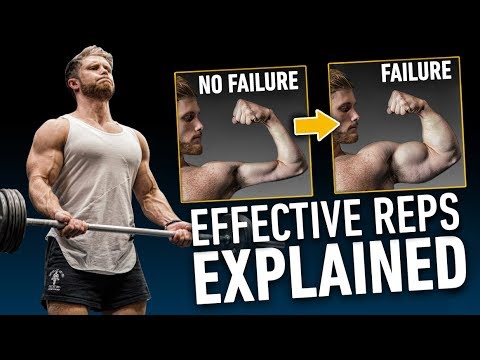
Related Video 2: "Effective Reps: Does Training To Failure Matter For Muscle Growth? | Science Explained" by Jeff Nippard
Another prevalent misunderstanding is that RIR is only for advanced athletes. This isn’t true. RIR is a versatile concept that can benefit individuals of all fitness levels, from beginners to seasoned gym-goers. It provides a simple yet effective way to gauge intensity and make informed decisions about when to increase weight, push for an extra rep, or scale back to prevent overexertion.
Lastly, some people believe that RIR is too complicated to incorporate into their workouts. However, once you understand the basic premise, it becomes a straightforward and valuable tool for tracking progress and optimizing your training sessions. Don’t let these misconceptions hold you back from utilizing RIR to enhance your fitness journey.
Examples of RIR in Practice

So, how can you practically apply RIR during your workouts?
Let’s take a look at some real-world examples of RIR in action.
Understanding the effectiveness of RIR in your training can help you optimize your workouts for better progress.
Plus, there are numerous benefits to incorporating RIR into your fitness routine.
Practical RIR Application
To apply the concept of RIR in practice, focus on selecting a weight that allows you to complete the prescribed number of repetitions with the intended level of effort. Here are three practical examples to help you understand how to apply RIR in your workouts:
1. Bicep curls: If your workout plan calls for 3 sets of 10 reps of bicep curls with an RIR of 2, choose a weight that allows you to complete the first set of 10 reps with a feeling that you could have done 2 more reps before reaching failure.
2. Squats: For squats, if you’re aiming for 5 sets of 5 reps with an RIR of 1, pick a weight that lets you complete each set of 5 reps with just 1 rep left in the tank.
3. Bench press: When doing bench presses, for 4 sets of 8 reps with an RIR of 3, use a weight that allows you to finish each set feeling like you could have done 3 more reps.
RIR Effectiveness in Training
Implementing RIR in your training regimen can effectively guide you in selecting the appropriate weight and managing your efforts during each set. This approach helps you tailor your workouts to match your specific goals, whether it’s strength, hypertrophy, or endurance. The table below offers practical examples of how RIR can be applied in various training scenarios. Remember, the key is to be honest with yourself about how many reps you truly have left in the tank. This self-awareness will optimize your training sessions and drive better results.
| Exercise | Set | Reps Completed | RIR (Reps in Reserve) |
| Bench Press | 3 | 8 | 2 |
| Squats | 4 | 10 | 3 |
| Lat Pulldowns | 5 | 12 | 1 |
RIR Benefits for Progress
Utilizing the RIR method in your training routine can significantly enhance your progress and performance in the gym.
Here are three examples of how RIR benefits your progress:
1. Better Recovery: By training to a specific RIR, you can manage fatigue more effectively, allowing for better recovery between sessions.
2. Enhanced Intensity: RIR helps you push your limits while maintaining proper form, leading to improved intensity during workouts.
3. Progressive Overload: Utilizing RIR enables you to consistently increase the challenge of your workouts, promoting continuous strength and muscle gains.
Incorporating RIR into your training not only helps you gauge your effort but also ensures that you’re consistently pushing yourself in a controlled and sustainable manner.

Related Video 3: "Stop Training to Failure the Wrong Way - Here's 3 Tips" by PictureFit
Frequently Asked Questions
Can RIR Be Used for All Types of Workouts, Including Strength Training, Endurance Training, and Hiit?
Yes, RIR can be used for all types of workouts, including strength training, endurance training, and HIIT. It's a versatile tool that helps you gauge how close you're to failure during each set, allowing you to adjust the intensity of your workout.This can be particularly beneficial for tracking progress and optimizing your training across various exercise modalities.
Is There a Recommended RIR Range for Different Fitness Goals, Such as Muscle Building, Fat Loss, or Overall Fitness?
For different fitness goals like muscle building, fat loss, or overall fitness, there's a recommended RIR range.For muscle building, aim for a lower RIR, around 0-2, to push your muscles to their limit.For fat loss, a moderate RIR of 2-4 can help maintain intensity while burning calories.For overall fitness, a higher RIR of 4-6 can balance intensity and recovery.Adjust RIR based on your specific goals and progress.
How Does RIR Compare to Other Intensity Measurement Methods, Such as Percentage-Based Training or Maximum Effort Sets?
When comparing RIR to other intensity measurement methods like percentage-based training or maximum effort sets, RIR stands out for its personalized approach. Instead of relying on fixed percentages or pushing to failure every set, RIR allows you to gauge your effort based on your individual capacity for each exercise.This can lead to more sustainable progress and a better understanding of your body's capabilities, making it a valuable tool in your training arsenal.


