

You know that in the realm of skill-related fitness components, each one plays a crucial role in enhancing your overall performance. But have you ever stopped to consider which of these components holds the key to unlocking your full potential?
It’s a question that has sparked countless debates among athletes, coaches, and fitness enthusiasts alike. As you navigate through the complexities of skill-related fitness, you’ll soon realize that the answer may not be as straightforward as it seems.
Table of Contents
Related Video: "(PE) What are the Skill-Related Fitness Components? | #iQuestionPH" by iQuestion PH
Main Points
– Agility is a skill-related fitness component that can be improved through exercises like agility ladder drills and cone drills. Improved agility leads to better sports performance and swift reaction to obstacles.
– Balance is important for overall functional fitness and injury prevention. Balance training reduces the risk of falls and injuries, strengthens stabilizing muscles, and enhances proprioception.
– Coordination, which includes hand-eye coordination, balance and stability, spatial awareness, and timing and rhythm, can be developed through regular practice and specific drills. Improved coordination leads to enhanced athletic performance and precision in complex movements.
– Power and speed are both crucial for athletic performance. Improving power leads to better performance, agility, and an edge over opponents, while enhancing speed directly impacts athletic performance and agility. Specific exercises like sprinting and agility ladder drills can help improve power and speed.
Agility

Agility is the ability to quickly and efficiently change direction and position of your body while maintaining control and balance. It’s a crucial skill in many sports and everyday activities. Your agility depends on factors like coordination, balance, speed, reflexes, and strength.
To enhance your agility, incorporate specific exercises into your training routine. Agility ladder drills, cone drills, and plyometric exercises are effective in improving your ability to move quickly and nimbly. These exercises challenge your body to make rapid adjustments, helping you become more responsive and agile.
The benefits of improved agility extend beyond sports performance. In daily life, being more agile can help you avoid accidents, react swiftly to unexpected obstacles, and maintain better overall physical function.
Balance

Now it’s time to shift your focus to the crucial aspect of balance.
You’ll learn about the importance of balance, how to train for it, and ways to assess your balance skills.
Stay tuned to discover how balance contributes to overall skill-related fitness.
Importance of Balance
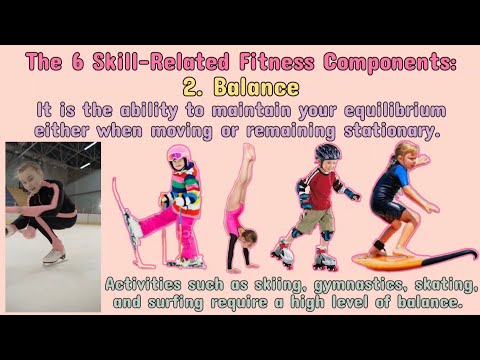
Improving your balance is crucial for enhancing overall functional fitness and preventing injuries in various physical activities. The importance of balance can’t be overstated, as it’s a fundamental component of skill-related fitness. Good balance enables you to maintain stability and control while performing movements, whether it’s during sports, strength training, or simple daily activities.
By enhancing your balance, you can improve coordination, agility, and posture, leading to better overall physical performance. Additionally, balance training helps to reduce the risk of falls and injuries, especially as you age. It strengthens stabilizing muscles and enhances proprioception, which is your body’s awareness of its position in space.
Incorporating balance exercises into your workout routine is essential for maximizing your functional fitness and overall well-being.
Training for Balance
To improve your balance, incorporate specific exercises into your workout routine that focus on strengthening stabilizing muscles and enhancing proprioception. Engage in activities that challenge your equilibrium and coordination, such as yoga, tai chi, or using a balance board.
Additionally, try these exercises to target your balance:
– Single-leg stands: Stand on one leg for 30 seconds, then switch to the other leg.
– Heel-to-toe walk: Walk in a straight line placing the heel of one foot directly in front of the toes of the other foot.
– Stability ball exercises: Use a stability ball for exercises like squats or planks to work on balance.
– Balance exercises with eyes closed: Practice balance exercises with your eyes closed to further challenge proprioception.
Incorporating these exercises into your routine can significantly improve your balance.
Assessing Balance Skills
You can assess your balance skills by performing a series of specific exercises designed to measure your stability and coordination.
One way to test your balance is by standing on one leg for as long as possible, first with your eyes open and then with them closed.
Another exercise involves walking heel to toe in a straight line, also known as the ‘tandem walk.’
The stork stand, where you stand on one leg with the other raised and your eyes closed, is another effective balance assessment.
Additionally, the balance board and stability ball can be used to challenge your balance skills.
By regularly practicing these exercises, you can improve your balance and reduce the risk of falls and injuries.
Regularly assessing balance skills is crucial for identifying areas that need improvement.
Coordination

Coordination is the ability to integrate multiple senses and body parts to perform smooth and efficient movements. It’s a crucial component of skill-related fitness, influencing your performance in various physical activities.
Hand-eye coordination: This is essential for activities such as catching a ball, hitting a target, or playing racquet sports.
Balance and stability: Coordination plays a key role in maintaining equilibrium and stability during dynamic movements.
Spatial awareness: Understanding your body’s position in relation to the environment is vital for coordinated movements, especially in team sports and dance.
Timing and rhythm: Coordination is also about executing movements in sync with specific rhythms and timings, as seen in dance, martial arts, and certain sports.
Developing coordination through regular practice and specific drills can enhance your overall athletic performance, reduce the risk of injuries, and improve your ability to perform complex movements with precision and control.

Related Video 2: "Skill-related Components of Fitness | Fitness Training & Programming" by Mike Tyler
Whether you’re a professional athlete or simply enjoy staying active, honing your coordination skills can significantly enhance your physical capabilities and overall enjoyment of physical activities.
Power

Developing coordination through regular practice and specific drills can enhance your overall athletic performance, reduce the risk of injuries, and improve your ability to perform complex movements with precision and control. When it comes to power, it is the ability to exert force or speed in a short amount of time, and it plays a crucial role in various physical activities. Power is essential for explosive movements such as jumping, sprinting, and throwing. It enables you to generate maximum force quickly, which is vital in sports like basketball, track and field, and weightlifting. Improving your power can lead to better performance and agility, giving you an edge over your opponents.
| Benefits of Power | Emotion | Importance |
|---|---|---|
| Enhanced Athletic Performance | Excitement | Crucial |
| Reduced Risk of Injuries | Confidence | Vital |
| Improved Agility | Determination | Essential |
Reaction Time

Improving your reaction time is essential for quickly responding to stimuli during physical activities, contributing to better performance and reducing the risk of injuries. Reaction time is a crucial component of skill-related fitness, impacting your ability to swiftly adjust to changing situations.
Here are a few key points to consider when focusing on enhancing your reaction time:
– Training Techniques: Engage in exercises and drills specifically designed to sharpen your reaction time, such as agility ladder drills, ball-catching exercises, and simulated game scenarios.
– Visual Acuity: Work on improving your visual acuity to better perceive and process incoming stimuli, ultimately leading to quicker reaction times.
– Mental Preparedness: Adopt mental strategies to stay focused and prepared for rapid responses, such as anticipating potential movements or actions in advance.
– Consistent Practice: Regularly incorporate reaction time training into your workout routines to maintain and improve this crucial skill.
Speed

To maximize your performance in physical activities, focus on enhancing your speed through targeted training and conditioning.
Speed is a crucial component of skill-related fitness, as it directly impacts your ability to excel in various sports and physical tasks. By improving your speed, you can enhance your overall athletic performance and agility.
Engaging in specific exercises such as sprinting, agility drills, and interval training can help you boost your speed and quickness. These activities not only enhance your muscle strength but also improve your neurological pathways, allowing for faster and more efficient movement.
Additionally, incorporating plyometric exercises into your training regimen can further enhance your speed by targeting explosive power and fast-twitch muscle fibers.
It’s important to remember that speed isn’t solely about running fast; it also encompasses the ability to accelerate, decelerate, and change direction rapidly. Therefore, incorporating multidirectional movements and agility training into your workouts is essential for a well-rounded speed enhancement program.
Frequently Asked Questions
How Can I Improve My Agility for Sports Like Soccer and Basketball?
To improve agility for sports like soccer and basketball, focus on exercises that enhance your speed, coordination, and quickness.Incorporate ladder drills, cone drills, and plyometric exercises into your training routine.Additionally, work on improving your balance and flexibility to move more efficiently on the field or court.Consistent practice and dedication to agility-focused workouts will help you become more agile and responsive in your sports performance.
What Are Some Balance Exercises That Can Help Prevent Falls in Older Adults?
To help prevent falls in older adults, incorporate balance exercises like single-leg stands, heel-to-toe walks, and standing yoga poses into your routine. These exercises challenge your stability and improve muscle coordination, reducing the risk of falling.Incorporating these exercises into your regular workout regimen can significantly enhance your balance and reduce the likelihood of falls, allowing you to maintain independence and stay active as you age.


