

You’ve been diligently sweating it out at the gym, but it feels like your calorie burn has hit a wall. It’s frustrating, isn’t it?
You’re putting in the same effort, yet the results just aren’t adding up. But before you throw in the towel, consider this: there are six common reasons why your body might be burning fewer calories during the same workout.
Understanding these factors could be the key to unlocking your fitness potential and reviving your calorie-burning furnace.
Table of Contents
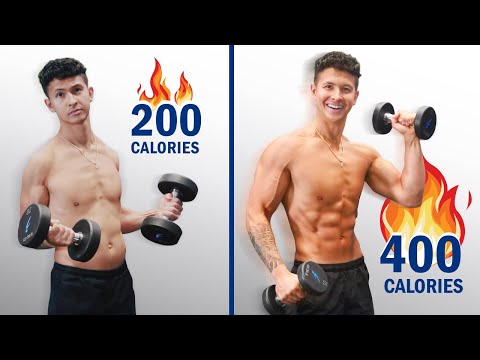
Related Video: "How To Burn More Calories Lifting Weights (Do These 3 Things)" by Jeremy Ethier
Main Points
– Poor form and technique, muscle adaptation, plateau effect, and inadequate rest and recovery can all contribute to burning fewer calories during the same workout.
– Increased insulin levels, hormonal shifts, and reduced muscle mass can also affect calorie burning efficiency.
– These factors can impact weight management, leading to frustration and challenges in maintaining or losing weight.
– To optimize calorie burning efficiency, it is important to understand the factors influencing it, support the body’s calorie burning efficiency, and make necessary adjustments for optimal results.
Poor Form and Technique

If you consistently use poor form and technique during your workouts, you may be hindering your ability to burn calories efficiently. Correct posture is crucial for effective calorie burning. When your body is in proper alignment, you engage the right muscles, allowing for more efficient movement. Improper alignment, on the other hand, leads to inefficient movement and reduces the number of calories burned during your workout. For example, if you’re doing squats with improper form, you may not be engaging your glutes and hamstrings effectively, resulting in fewer calories burned.
It’s important to pay attention to muscle engagement as well. Failing to engage the targeted muscles during an exercise can lead to inefficiency and reduced calorie burn. For instance, if you’re not engaging your core during planks, you won’t be maximizing the calorie-burning potential of the exercise.
Muscle Adaptation

When your body becomes accustomed to a particular exercise routine, known as muscle adaptation, it can lead to a decrease in the number of calories burned during your workouts. Muscle adaptation occurs when your muscles become more efficient at performing the same exercises, requiring less energy expenditure over time. This means that the once challenging workout that used to burn a significant amount of calories may no longer have the same effect.
Additionally, muscle adaptation can lead to muscle imbalances, where certain muscles become stronger while others are neglected. This can affect your overall workout performance and increase the risk of injuries. To prevent this, it’s important to regularly change your workout routine, incorporating different exercises and variations to challenge your muscles in new ways. By doing so, you can prevent your body from adapting too quickly and continue to burn calories effectively while also preventing injuries and muscle imbalances.
Incorporating variety into your workouts not only prevents muscle adaptation but also keeps your exercise routine interesting and engaging. So, mix it up and keep your body guessing to maximize calorie burn and overall fitness benefits.
Plateau Effect

So, you’ve hit a plateau in your weight loss journey, and it’s frustrating. Your body has adapted to your current exercise and diet routine, causing your metabolism to slow down.
This plateau effect can make it difficult to continue burning calories and losing weight.
Plateau Causes
Experiencing a plateau in your calorie burning efforts can be discouraging, but understanding the underlying causes is crucial for overcoming this obstacle. The following factors might be contributing to your plateau:
– Nutrition impact: Your diet plays a significant role in your body’s ability to burn calories efficiently. Poor nutrition choices can hinder your progress and lead to a plateau in your calorie burning efforts.
– Mental fatigue: Constantly pushing yourself without allowing for adequate recovery can lead to mental fatigue, causing a plateau in your workout performance and calorie burning potential.
– Lack of variety in workouts: Doing the same exercises repeatedly can lead to a plateau in your calorie burning. Your body becomes efficient at performing the same routine, resulting in fewer calories burned.
Metabolic Adaptation
If you’ve been frustrated by your lack of progress in burning calories, you may have encountered a phenomenon known as metabolic adaptation, also referred to as the plateau effect.
Metabolic adaptation occurs when your body adjusts to the same workout routine, causing a decrease in your metabolic rate and subsequently hindering weight loss.
Essentially, your body becomes more efficient at performing the exercises, leading to a reduction in the number of calories burned during the workout.
This adaptation is a natural survival mechanism that allows the body to conserve energy in response to consistent physical demands.
To overcome this plateau effect, it’s essential to introduce variety into your workouts, such as incorporating different exercises, increasing intensity, or changing the duration of your workouts to keep challenging your body and prevent it from adapting.
Inadequate Rest and Recovery

Insufficient rest and recovery can significantly impact your body’s ability to burn calories efficiently and effectively. When you don’t give your body enough time to recover, it can lead to overtraining, which in turn reduces your overall calorie burn.
Additionally, inadequate rest can hinder your sleep quality, further impacting your exercise performance and calorie-burning potential.
Here are a few ways inadequate rest and recovery can affect you:
– Overtraining can lead to decreased muscle efficiency, reducing the number of calories burned during workouts and at rest.
– Poor sleep quality can disrupt hormone regulation and lead to increased stress levels, both of which can hinder your body’s ability to burn calories effectively.
– Inadequate recovery time can result in decreased muscle repair and growth, ultimately impacting your metabolic rate and calorie expenditure.
Lack of Progression

You might be experiencing a lack of progression in your workouts, which can be frustrating.
If you find yourself hitting a plateau in intensity and performing the same repetitive exercise routine, it could be a sign that your body has adapted and needs a new challenge.
It’s important to recognize these signs and make adjustments to keep making progress towards your fitness goals.
Plateau in Intensity
Sometimes, it becomes challenging to break through a plateau in intensity during workouts, hindering your progress and causing frustration. Here are a few aspects to consider that may be contributing to this issue:
– Workout modifications: Are you making necessary adjustments to your workout routine to keep challenging your body?
– Training adjustments: Have you been progressively increasing the difficulty of your workouts to avoid hitting a plateau?
– Intensity variation: Are you incorporating enough variation in the intensity of your exercises to keep your body adapting and progressing?

Related Video 2: "Men Vs Women: The Best Way To Lose Fat (KEY DIFFERENCES)" by Jeremy Ethier
Breaking through a plateau in intensity often requires a strategic approach that involves continuously modifying workouts, adjusting training intensity, and incorporating diversity in exercises. It’s important to stay proactive and open-minded in order to overcome this obstacle and continue making progress in your fitness journey.
Repetitive Exercise Routine
Try incorporating new exercises and increasing the intensity to avoid getting stuck in a repetitive exercise routine that hinders your progression.
Lack of exercise variety can lead to training adaptation, where your body becomes efficient at performing the same workout, resulting in burning fewer calories. When you perform the same exercises repeatedly, your muscles adapt to the movements, leading to decreased calorie expenditure.
To overcome this, incorporate different exercises targeting the same muscle groups or increase the intensity by adding weights or adjusting the speed and duration of your workout. By introducing variety and challenging your body with new movements, you can prevent plateauing and continue to burn calories effectively.
Metabolic Changes

As your body ages, hormonal changes and decreased muscle mass can lead to a slower metabolism, resulting in burning fewer calories. These metabolic changes can be frustrating, but understanding them can help you make adjustments to your workout routine and lifestyle.
Here are a few key factors contributing to these metabolic changes:
– Increased Insulin Levels: With age, your body may become less sensitive to insulin, the hormone that helps regulate blood sugar. This can lead to higher insulin levels, which may promote fat storage and make it harder to burn calories.
– Hormonal Shifts: As you age, hormonal fluctuations, particularly a decrease in estrogen and testosterone, can impact your metabolism. These changes can slow down your body’s ability to burn calories efficiently.
– Reduced Muscle Mass: Aging often leads to a natural decline in muscle mass, which can decrease your basal metabolic rate. This means that your body burns fewer calories at rest, making weight management more challenging.
Understanding these metabolic changes can help you tailor your workout and dietary strategies to better support your body’s evolving needs.

Related Video 3: "SWEAT Talk - If I'm not sweating am I burning less calories? If I sweat more do I burn more?" by Studio SWEAT onDemand
Frequently Asked Questions
Can Certain Medications or Medical Conditions Affect My Metabolic Rate and Lead to Burning Fewer Calories During the Same Workout?
Certain medications and medical conditions can impact your metabolic rate, leading to fluctuations in calorie burn during the same workout.The effect of medication on your metabolism and the influence of medical conditions can cause you to burn fewer calories.It's important to be aware of how these factors may be affecting your body and adjust your workout routine or seek medical advice accordingly.
Are There Specific Dietary Factors That Could Be Contributing to My Decreased Calorie Burn During Workouts?
You might be experiencing decreased calorie burn during workouts due to factors like nutrient timing and metabolism. Pay attention to when and what you eat before exercise to optimize your energy levels.Additionally, staying well-hydrated can improve your performance and help maintain a consistent calorie burn during workouts.Consider consulting a nutritionist to ensure your dietary choices support your fitness goals.
How Can Stress and Cortisol Levels Impact My Ability to Burn Calories During Exercise?
Stress management and cortisol regulation play a big role in your ability to burn calories during exercise. When stress levels are high, cortisol, a stress hormone, can lead to increased appetite and fat storage. This can impact your exercise intensity and calorie expenditure.It's important to find ways to manage stress through activities like yoga, meditation, or deep breathing exercises to help regulate cortisol levels and support your fitness goals.


