

You’ve probably heard that the bench press is a staple in any strength training routine, but have you ever wondered exactly what muscle groups it targets?
Sure, it’s great for building a strong chest, but there’s more to it than that. As you lower the bar to your chest and push it back up, you’re not just working your pecs. In fact, the bench press engages a total of six different muscle groups, each playing a crucial role in the movement.
But what exactly are these muscle groups, and how does benching benefit them?
Table of Contents

Related Video: "How to PROPERLY Bench Press for Growth (5 Easy Steps)" by Jeremy Ethier
Main Points
– The bench press targets several muscle groups including the chest, front shoulders, triceps, serratus anterior, and core muscles.
– Proper form and technique during bench pressing include maintaining a 45-degree angle with elbows, pulling shoulders back and down for stability, and engaging the shoulders and triceps during the movement.
– Engaging the core during bench pressing provides increased stability and control, improved overall strength and power, reduced risk of lower back injury, enhanced transfer of force, and improved posture and alignment.
– Variations and additional exercises to target specific muscle groups include incline or decline bench presses for different angles of chest engagement, close-grip bench presses or resistance bands for triceps focus, and compound exercises like planks and Russian twists to target the core.
Chest

To effectively target your chest muscles during a bench press workout, focus on maintaining proper form and engaging your chest throughout the exercise.
Start by lying flat on the bench with your feet planted firmly on the ground. Grip the barbell slightly wider than shoulder-width apart, and lower it to your chest while keeping your elbows at a 45-degree angle.
As you push the barbell back up, concentrate on squeezing your chest muscles to drive the movement. This intentional engagement of your chest throughout the exercise ensures that the muscles are being effectively targeted and worked.
It’s crucial to avoid simply going through the motions and instead, be mindful of the chest muscles being utilized in each repetition.
Additionally, incorporating variations such as incline or decline bench presses can further isolate and challenge the chest muscles.
Remember that maintaining proper form and focusing on engaging your chest will optimize the effectiveness of your bench press workout, leading to improved chest muscle strength and development.
Shoulders

Engage your shoulders by maintaining proper form and focusing on intentional muscle activation during your bench press workout, building on the targeted approach used for the chest muscles.
When it comes to working out your shoulders during a bench press session, there are a few key points to keep in mind:
– Shoulder Position: Ensure that your shoulders are pulled back and down throughout the movement. This helps to stabilize the shoulders and prevent excessive strain on the joint.
– Range of Motion: Pay attention to the full range of motion during the bench press. Lower the barbell with control to a point where your upper arms are parallel to the ground, allowing your shoulders to engage fully without overextension.
– Mind-Muscle Connection: Focus on actively engaging your shoulder muscles as you press the weight upwards. Visualize the shoulders contracting and extending with each repetition to maximize their involvement in the exercise.
Triceps

Ensure proper positioning of your elbows to maximize triceps engagement during your bench press workout. The triceps play a crucial role in the bench press, as they’re responsible for extending your arms during the upward phase of the movement. By keeping your elbows close to your body and ensuring they’re fully extended at the top of the lift, you effectively target and engage the triceps muscles.
During the bench press workout, your triceps act as synergistic muscles, assisting the primary movers, such as the chest and shoulders, in completing the pressing motion. As you lower the barbell towards your chest, the triceps are lengthened and stretched. Then, as you push the barbell back up, the triceps contract to extend your elbows and straighten your arms.
To specifically target the triceps during your bench press workout, consider incorporating variations such as close-grip bench presses or using resistance bands. These variations can place additional emphasis on the triceps, helping to strengthen and develop these muscles.
Proper form and technique are essential for effectively engaging and working the triceps during your bench press workout.
Biceps

During your bench press workout, your biceps play a crucial role in assisting the primary movers, such as the chest and shoulders, as you lift and lower the barbell. Although the bench press primarily targets the chest, your biceps are actively engaged throughout the exercise to provide stability and support.
Here’s how your biceps come into play during the bench press:
– Stabilization: As you lower the barbell towards your chest, your biceps contract to stabilize and control the movement, preventing excessive strain on your elbows and shoulders.
– Assistance: While the chest and shoulders are the primary muscles responsible for pushing the barbell away from your chest, your biceps act as secondary movers, providing additional strength and power during the upward phase of the lift.
– Controlled Descent: When lowering the barbell back down, your biceps eccentrically contract to control the descent, ensuring a smooth and controlled movement.
Engaging your biceps during the bench press not only contributes to overall upper body strength but also supports proper form and technique, reducing the risk of injury.
Upper Back

Your upper back muscles provide crucial support and stability throughout the bench press exercise, contributing to overall strength and proper form. When you perform a bench press, your upper back muscles, including the trapezius, rhomboids, and rear deltoids, work to stabilize and retract the shoulder blades. This stabilization helps to maintain proper posture and form, allowing you to generate more power and lift heavier weights safely. Additionally, the engagement of the upper back muscles during the bench press helps to prevent shoulder injuries by creating a strong foundation and reducing the stress on the shoulder joints.
Incorporating bench press into your workout routine not only targets the chest, shoulders, and triceps but also engages the upper back muscles. By actively retracting the shoulder blades and engaging the upper back, you can improve your overall bench press performance and reduce the risk of injury.

Related Video 2: "The Fastest Way To Blow Up Your Bench Press (4 Science-Based Steps) + Sample Program" by Jeff Nippard
Core

Your core plays a crucial role in maintaining stability during your bench press workouts. Engage your abdominal muscles to support your spine and prevent excessive arching.
Stability During Lifting
Maintaining a stable core during the bench press is essential for proper form and to reduce the risk of injury. Your core muscles, including the abdominals, obliques, and lower back, play a crucial role in providing stability and support during the lifting motion.
Here’s what you need to focus on to ensure stability during your bench press workouts:
– Engage your core by bracing your abdominals as if you were about to receive a light punch.
– Keep your lower back in a neutral position to prevent overarching or excessive arching during the lift.
– Focus on breathing deeply and maintaining core stability throughout the entire range of motion to support your spine and enhance overall lifting performance.
Engaging Abdominal Muscles
To ensure stability during your bench press workout, engaging your abdominal muscles is crucial for maintaining proper form and reducing the risk of injury. When you engage your core, you create a solid foundation for your upper body to push against, enhancing your overall strength and power. Tightening your abdominals also helps to prevent excessive arching of the lower back, promoting a neutral spine position and reducing the risk of strain.
Additionally, activating your core muscles throughout the bench press movement enhances your overall body control and balance, allowing you to lift heavier weights more safely. By consciously involving your abdominal muscles during your bench press workout, you not only protect your spine and reduce the risk of injury but also maximize the effectiveness of the exercise for building strength and muscle mass.
Balance and Control
Engaging your core muscles is essential for maintaining balance and control during your bench press workout. As you lower the barbell, your core stabilizes your body and prevents excessive arching or overarching of the back.
To effectively engage your core during bench pressing, remember to:
– Keep your abs tight throughout the entire movement, from the descent to the ascent.
– Focus on bracing your core as if you were about to receive a light punch in the stomach.
- Maintain a neutral spine position by avoiding excessive arching or rounding of the back.
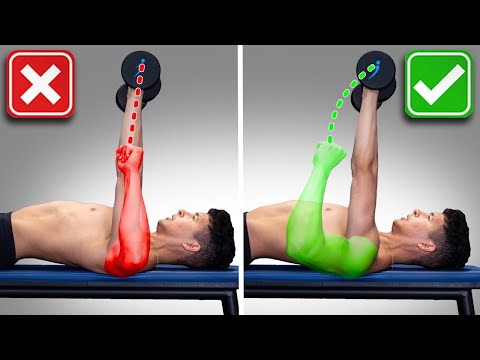
Related Video 3: "STOP Doing Dumbbell Press Like This (5 Mistakes Slowing Your Chest Gains)" by Jeremy Ethier
Frequently Asked Questions
What Is the Proper Form for Bench Pressing to Target All the Muscle Groups Effectively?
To effectively target all muscle groups while bench pressing, exaggerate your focus on maintaining proper form.Keep your feet planted firmly on the ground, grip the bar slightly wider than shoulder-width, and lower it to your chest while keeping your elbows at a 45-degree angle.Press the bar back up explosively, fully extending your arms.This hyper-focus on form will ensure maximal muscle engagement and growth across all targeted areas.
How Can I Modify My Bench Press Routine to Target Specific Muscle Groups More Intensely?
To modify your bench press routine and target specific muscle groups more intensely, try adjusting your grip width. A wider grip can focus on the chest, while a narrower grip may target the triceps more.Additionally, incorporating pauses at different points in the movement can engage specific muscles. For example, pausing at the bottom of the bench press can increase chest activation, while pausing at the top can emphasize triceps engagement.


